

Workmen Compensation Insurance 2026: Complete Guide for Malaysian Employers
Discover key insights on workmen compensation insurance and how it safeguards employee safety. Read our essential guide to protect your workforce today.

Every employer in Malaysia faces potential liability when workplace accidents occur. Whether you’re managing a construction site, manufacturing facility, or employing domestic helpers, understanding workmen compensation insurance is crucial for legal compliance and financial protection. This comprehensive guide will help you navigate Malaysia’s compensation insurance requirements, coverage options, and provider selection process.
The stakes are significant. Employers who fail to maintain proper coverage face penalties up to RM50,000, while a single workplace accident can result in substantial financial liability. With Malaysia’s Workmen’s Compensation Act 1952 and subsequent amendments creating specific obligations for employers, having the right protection is legally mandated for many businesses.
What is Workmen Compensation Insurance
Workmen compensation insurance provides financial protection for employers against statutory liabilities under Malaysia’s Workmen’s Compensation Act 1952. This insurance coverage serves as a safety net, ensuring that when employees suffer accidental personal injury or occupational diseases during the course of their employment, employers can meet their legal obligations without facing catastrophic financial consequences.

The insurance operates under a no-fault system, meaning that compensation is payable regardless of who caused the accident. This approach protects both employees and employers by providing guaranteed benefits while limiting liability exposure. The policy contract typically covers two main areas: statutory compensation as defined by workmen compensation laws, and common law claims that may arise outside the statutory framework.
Unlike SOCSO (Social Security Organisation) coverage, which protects certain categories of Malaysian workers, workmen’s compensation specifically covers employees who are generally not protected under existing social security schemes. This includes foreign workers, domestic helpers, and employees earning below specific wage thresholds as laid out in the original act and subsequent amendments.
The meaning of this coverage extends beyond simple insurance, it represents a legal requirement that employers must fulfill to operate legitimately in Malaysia. The expenses incurred for maintaining this coverage are considered necessary business costs, similar to other forms of liability protection that companies must carry.
Coverage and Benefits
Workmen compensation insurance provides comprehensive protection against various workplace risks and liability exposures. The primary coverage focuses on personal injury sustained by workers during the course of employment, including both acute accidents and long-term occupational health issues.
Core Coverage Areas
The insurance covers personal injuries sustained from workplace accidents, including slips, falls, machinery incidents, and other hazardous events that occur while employees are performing their duties. This protection extends beyond the physical workplace to include off-site activities conducted in the course of employment, such as delivery work or client visits.
Disease arising from occupational exposure represents another critical coverage area. Workers who develop respiratory conditions, chemical poisoning, or other illness related to their work environment are eligible for compensation. The policy typically covers medical expenses, ongoing care, and rehabilitation costs necessary for treating these conditions.
Death benefits provide financial protection for families when workplace accidents result in fatalities. These benefits include burial expenses up to specified limits, plus ongoing income support for eligible dependents. The sums payable under death benefits are calculated based on the employee’s wages and family circumstances as defined in the relevant legislation.
Employee Categories Covered
Foreign workers from countries including Indonesia, Bangladesh, Nepal, and Myanmar must be covered under specific compensation schemes. Since January 1, 2019, the Foreign Workers Compensation Scheme (FWCS) has been mandatory for all foreign workers, with minimum coverage of RM10,000 for death and permanent disability.
Domestic helpers and household staff represent another protected category, ensuring that employers who hire cleaning staff, caregivers, or other household employees maintain proper coverage. Manual laborers in construction, manufacturing, and agricultural sectors also require protection under the compensation framework.
The act specifically covers employees earning monthly wages below RM4,000, though employers may choose to extend coverage to higher-earning workers. This wage threshold helps determine which workers fall under statutory requirements versus optional coverage extensions.
Types of Workmen Compensation Insurance
Malaysia’s insurance market offers several distinct types of workmen compensation coverage, each designed to meet specific employer needs and legal requirements. Understanding these options helps employers select appropriate protection while ensuring full compliance with applicable laws.

Standard workmen’s compensation policies cover basic statutory requirements as outlined in the Workmen’s Compensation Act 1952. These policies provide the minimum protection required by law, covering compensation payments, medical expenses, and legal costs associated with covered claims. The insurance typically operates without deductibles for injured workers, with the insurer paying covered medical costs directly to healthcare providers.
Employers’ liability insurance extends protection beyond statutory limits, covering common law claims that may arise outside the exclusive remedy framework. This coverage becomes particularly important when employees or their families pursue legal action beyond the standard compensation scheme, potentially seeking damages for pain and suffering or other non-economic losses.
Foreign Workers Compensation Scheme Insurance
The Foreign Workers Compensation Scheme represents a specialized form of workmen compensation insurance mandated for all foreign workers in Malaysia. This coverage must be maintained throughout the duration of foreign workers’ employment contracts and is required for work permit renewals and visa applications.
FWCS policies cover journey to and from workplace incidents, extending protection beyond traditional workplace boundaries. The scheme provides minimum coverage amounts, though employers may purchase higher limits for enhanced protection. Coverage must be obtained through approved insurance providers who have received authorization to offer FWCS policies.
The scheme’s administration involves coordination between employers, insurance providers, and government agencies to ensure proper coverage and claims processing. Employers must maintain current certificates and provide proof of coverage when requested by immigration authorities or labor department officials.
Comprehensive Coverage Packages
Many insurers offer comprehensive packages that combine multiple liability coverages under a single policy contract. These packages may include standard workmen’s compensation, employers’ liability, and additional protections such as public liability or professional indemnity coverage.
Industry-specific policies cater to particular sectors such as construction, manufacturing, and service industries. These specialized policies address unique risks and exposure patterns common to specific business types, often providing more relevant coverage than generic policies.
Exclusions and Limitations
While workmen compensation insurance provides broad coverage, certain exclusions and limitations apply that employers must understand to avoid coverage gaps. These exclusions help insurers manage risk while keeping premium costs reasonable for policyholders.
War, civil war, and terrorism-related incidents are typically excluded from coverage under standard policies. Given Malaysia’s generally stable environment, these exclusions rarely affect claims, but employers in certain regions or industries may need to consider additional protection for political violence or terrorism risks.
Radioactive contamination and nuclear energy risks fall outside standard coverage parameters. While few Malaysian businesses face these exposures, companies involved in nuclear medicine, research, or energy sectors should verify their coverage needs with specialized insurers.
Health and Medical Exclusions
Latex protein toxic syndrome and asbestos-related claims may be excluded under certain policies, despite these conditions’ potential workplace origins. Employers in healthcare, construction, or manufacturing should carefully review their policy terms to ensure adequate protection against occupational disease claims.
Pre-existing medical conditions unrelated to employment are generally excluded from coverage. However, the distinction between work-related aggravation of existing conditions and independent medical issues can become complex during claims investigations.
Behavioral and Criminal Exclusions
Self-inflicted injuries or those resulting from criminal activities by the employee are excluded from most policies. Additionally, injuries occurring while the employee was under the influence of alcohol or illegal substances may be contested or denied, depending on specific policy language and circumstances.
Injuries occurring outside the employment scope or workplace premises may not be covered unless they fall within specific exceptions for work-related travel or off-site duties. The course of employment definition becomes crucial in determining coverage eligibility for these incidents.
Legal Requirements in Malaysia
Malaysian law imposes specific obligations on employers regarding workmen compensation insurance, with significant penalties for non-compliance. Understanding these requirements helps employers maintain proper coverage while avoiding legal difficulties.
The Workmen’s Compensation Act 1952, along with subsequent amendments, establishes the legal framework for compensation insurance requirements. This legislation defines covered employees, mandatory coverage levels, and employer obligations for maintaining protection throughout employment periods.
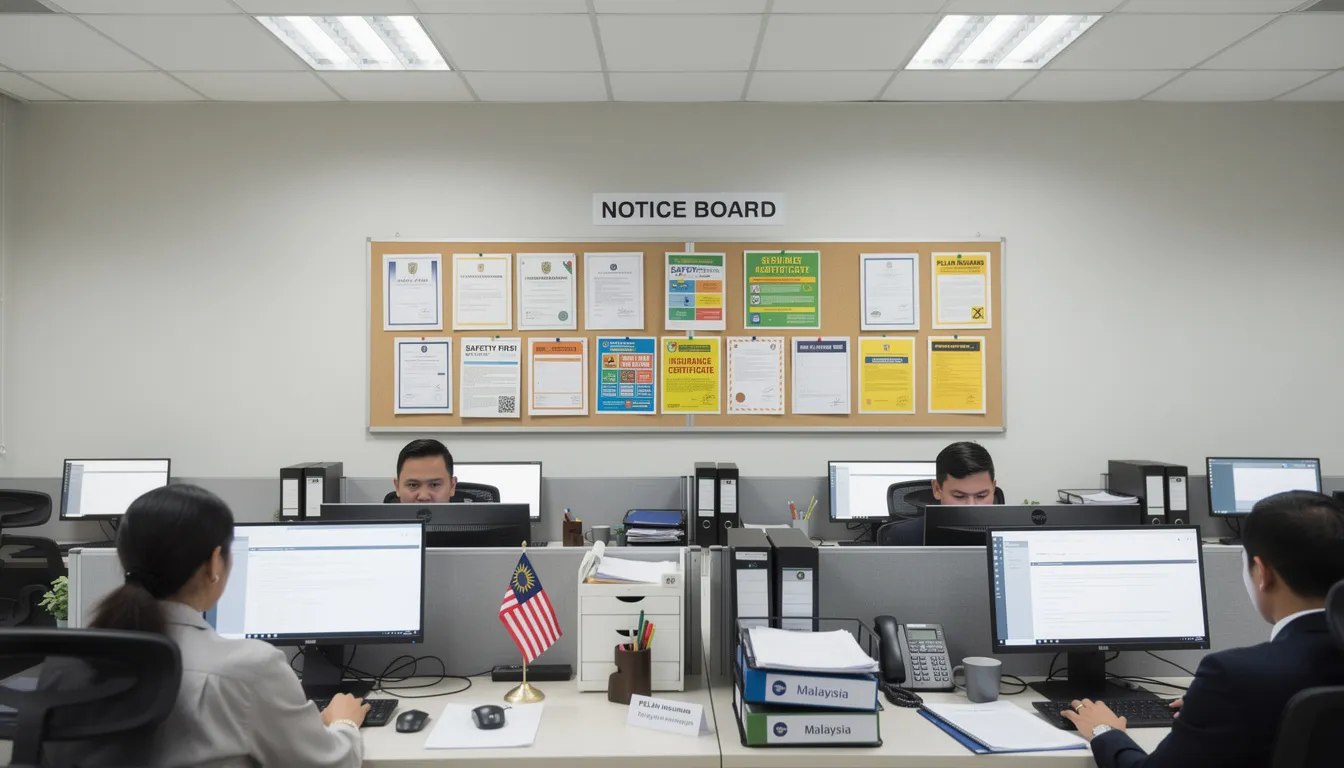
Since January 1, 2019, the Foreign Workers Compensation Scheme has been mandatory for all foreign workers, creating additional compliance obligations for employers who hire non-Malaysian staff. This requirement links directly to immigration and work permit processes, making coverage essential for business operations that rely on foreign labor.
Compliance Obligations and Penalties
Employers face penalties up to RM50,000 for operating without required coverage, making compliance a critical business consideration. These penalties can escalate with the duration and severity of non-compliance, potentially including criminal prosecution in extreme cases.
Policy certificates must be displayed at workplace premises where they can be easily seen by employees and inspectors. This requirement ensures that workers understand their protection and enables government officials to verify compliance during routine inspections.
Coverage must be maintained throughout employee contract periods, with regular policy renewals required to maintain legal compliance. Gaps in coverage, even brief ones, can result in significant penalties and liability exposure for employers.
Regulatory Oversight
Bank Negara Malaysia regulates insurance providers offering workmen compensation coverage, ensuring that insurers maintain adequate reserves and financial stability to pay claims. This oversight protects employers and employees by requiring insurers to meet strict solvency and operational standards.
The Department of Occupational Safety and Health (DOSH) and Department of Labour may conduct inspections to verify compliance with compensation insurance requirements. Employers should maintain current policy documents and be prepared to demonstrate coverage when requested.
Regular audits and reviews by regulatory agencies help ensure that the compensation system operates effectively while protecting both employer and employee interests. These oversight activities also identify emerging trends and potential areas for system improvements.
Choosing the Right Provider
Selecting an appropriate insurance provider for workmen compensation coverage requires careful evaluation of multiple factors, from premium rates to claims processing efficiency. The choice of insurer can significantly impact both costs and the quality of protection your business receives.
Licensed insurers operating in Malaysia include established companies such as Allianz Malaysia, QBE Malaysia, Tokio Marine, and Berjaya Sompo. Each provider offers different strengths, whether in pricing, coverage options, or specialized services for particular industries or employee categories.
Provider Evaluation Criteria
Premium rates vary significantly between providers, making comparison shopping essential for cost-conscious employers. However, the lowest premium doesn’t always represent the best value, particularly if it comes with limited coverage or poor claims service. Request detailed quotes that specify coverage limits, deductibles, and any additional benefits included in the policy.
Claims processing efficiency directly affects how quickly injured employees receive benefits and how smoothly employers navigate the aftermath of workplace incidents. Research providers’ claims handling reputation by speaking with other employers in your industry or reviewing customer satisfaction data where available.
Customer service quality becomes crucial when questions arise about coverage, policy changes, or claims procedures. Providers with local offices and dedicated account management teams often deliver superior service compared to those operating primarily through call centers or online platforms.
Coverage Considerations
Medical network partnerships can provide significant value by ensuring injured employees have access to quality healthcare providers who understand the compensation system. Some insurers maintain preferred provider networks that streamline treatment authorization and billing processes.
Industry-specific coverage requirements may make certain providers more suitable for your business type. Construction companies, for example, benefit from insurers with extensive experience in construction risks and safety programs tailored to that industry.
Additional benefits such as safety training programs, risk assessment services, or return-to-work support can add substantial value beyond basic insurance coverage. These services help prevent accidents while reducing claim costs, creating win-win outcomes for employers and employees.
Regulatory Compliance
All providers must comply with Bank Negara Malaysia regulations, but some demonstrate stronger commitment to regulatory excellence than others. Verify that your chosen provider maintains current licensing and meets all financial stability requirements set by Malaysian regulators.
The ability to provide required certificates promptly and maintain accurate policy records becomes important for ongoing compliance. Choose providers with proven systems for policy administration and documentation that support your regulatory obligations.
Regular policy reviews and updates ensure that coverage remains adequate as your business evolves. Select providers who proactively communicate about coverage needs and regulatory changes that might affect your protection requirements.
When evaluating providers, remember that workmen compensation insurance represents more than just a legal requirement—it’s a critical business protection that safeguards your company’s financial stability while ensuring injured employees receive proper care and compensation. The right provider becomes a valuable business partner in managing these important responsibilities.
For comprehensive guidance on workmen compensation requirements and available coverage options, please refer to PIDM’s tips brochure and consult with qualified insurance professionals who understand Malaysia’s regulatory framework.
Speak to us at Foundation to discuss your specific needs and obtain personalised recommendations for your business protection strategy.
Get started
If you're managing a construction project, industrial facility, or commercial property in Malaysia and need insurance coverage, we can help structure a program that works.

Insights on Property & Engineering Risks
Practical guidance on construction, industrial, and engineering insurance in Malaysia

Let’s Work Together
If you're managing a construction project, industrial facility, or commercial property in Malaysia and need insurance coverage, we can help structure a program that works.

Foundation Insurance Solutions is a registered and licensed insurance intermediary in Malaysia specialising in property and engineering insurance for industrial operations. We provide comprehensive coverage for manufacturers, contractors, and facility owners across construction, electronics, food production, and high-risk industrial sectors.
Riskflow Sdn Bhd (202101001225):
Suite 3.19 (North Block), The Ampwalk, 218 Jalan Ampang, 50450 Kuala Lumpur, Wilayah Persekutuan Kuala Lumpur
t: +60199002450 (Kevin)
email: contact@getfoundation.com.my